




A trademark registration certificate in India is the official document issued by the Trade Marks Registry confirming that a trademark has been registered under the Trade Marks Act, 1999. Once a trademark application completes examination, publication in the Trade Marks Journal, and any opposition proceedings, the Registry issues the registration certificate in favour of the registered proprietor.
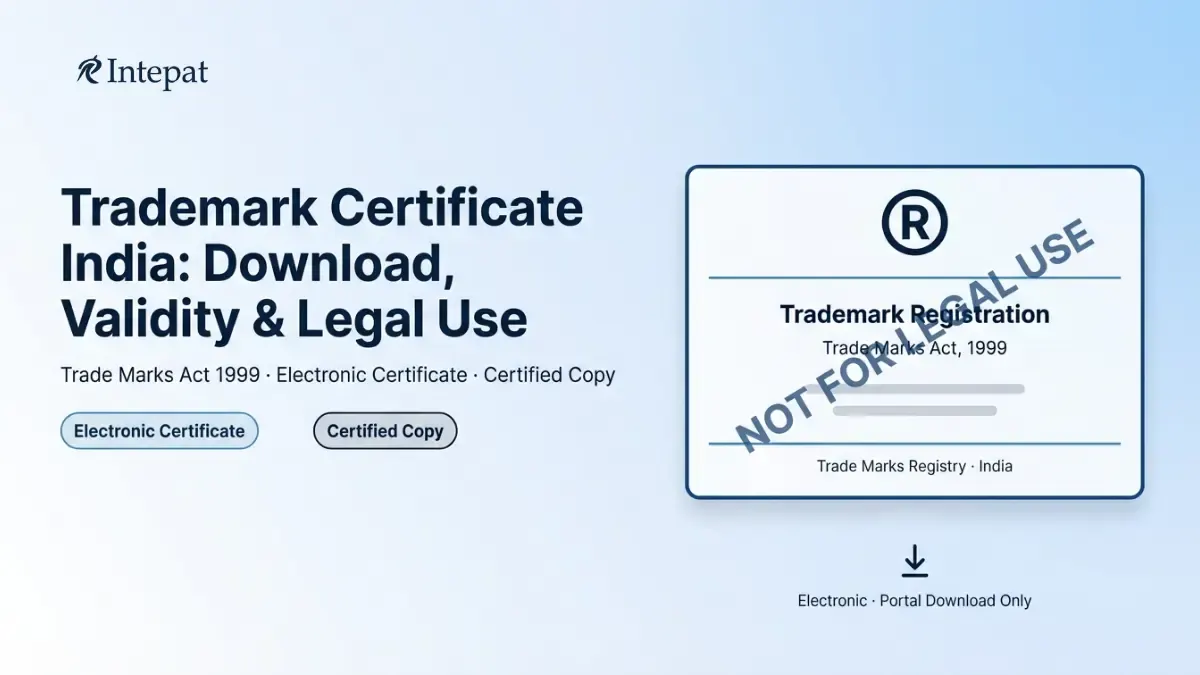
In India, the trademark certificate is issued electronically after the application status changes to “Registered.” The certificate can be downloaded online from the IP India portal. However, the downloaded certificate is typically marked “NOT FOR LEGAL USE” and cannot be relied upon for court proceedings or foreign trademark filings, where a certified copy issued by the Trademark Registry may be required.
This guide explains how to download a registered trademark certificate in India, when a certified copy is required, and how the certificate is used for legal enforcement and international trademark filings.
Certificate Digital Issuance and Access
Since trademark administration in India is digitised, registration certificates are issued and accessed online through the Registry portal. Many proprietors check for a trademark certificate download as soon as the status shows “Registered,” typically for record-keeping, licensing discussions, or proof of ownership.
Even so, uncertainty often arises about when the certificate is generated, how the download works, and whether the downloaded version is legally sufficient. A clear distinction between a downloadable certificate and a certified copy issued by the Registry helps trademark owners avoid procedural errors and delays.
This article explains what a trademark certificate signifies, how trademark certificate download in India works, the legal limitations of a downloaded certificate, and when trademark owners must obtain a certified copy for enforcement or foreign filings. For readers navigating earlier stages, understanding the trademark registration process in India—covering examination, publication, and opposition timelines—provides helpful context, because issuance of the certificate is directly linked to successful completion of those stages.
When Is a Trademark Certificate Issued and Where Can It Be Accessed in India?
A trademark registration certificate in India is issued only after a trademark application has successfully completed all statutory stages and is formally entered in the Register of Trademarks. The certificate is generated only after registration, and not at the time of filing, examination, or publication.
The issuance of the trademark certificate is therefore directly linked to the successful completion of the trademark lifecycle, including examination, publication, and any opposition proceedings.
Stage at Which a Trademark Certificate Is Issued
A trademark registration certificate is issued when all of the following conditions are satisfied:
- the trademark application has been examined and accepted by the Trade Marks Registry;
- the trademark has been published in the Trade Marks Journal;
- no opposition is filed within the prescribed period, or any opposition filed has been finally decided in favour of the applicant; and
- the trademark application record reflects the status “Registered” in the Registry database.
If an opposition is filed, issuance of the trademark certificate is deferred until the trademark opposition proceedings in India are concluded and the application is allowed to proceed to registration.
Automated Issuance of Trademark Registration Certificates
The Trade Marks Registry follows an automated system for issuing trademark registration certificates for eligible applications. Once registration is completed and no procedural or compliance requirements remain pending, the Registry generates the electronic trademark registration certificate without requiring any separate request from the applicant.
This automated issuance forms part of the post-registration framework governing trademarks, which also includes obligations such as renewal of trademark registration in India, recordal of assignments, and enforcement of trademark rights.
2.3 Where Is the Trademark Registration Certificate Made Available After Registration?
After a trademark application is registered, the Trademark Registry makes the trademark registration certificate available electronically through its official systems.
Access to the certificate is provided in the following manner:
- where the trademark application has been filed through a trademark attorney or registered agent, the registration intimation is sent to the email address recorded as the service address, and the proprietor must obtain the certificate through the attorney or agent; and
- where access is sought directly by the proprietor, the trademark registration certificate is hosted on the official Trademark eRegister and Application Status portal of the Trade Marks Registry, which requires OTP-based authentication using the registered email address or mobile number.
Upon successful access to the registered trademark record, the system displays a link to view the trademark registration certificate, which confirms the registration particulars as maintained in the electronic register.
The certificate made available through this electronic system is expressly marked as “NOT FOR LEGAL USE”, and serves only as confirmation of registration, without replacing a certified copy issued by the Trademark Registry for legal or foreign filing purposes.
How to Download a Trademark Certificate in India (Step-by-Step)
Once a trademark application has been registered and the registration certificate has been made available electronically, the trademark proprietor or authorised representative can proceed with trademark certificate download in India through the official portal of the Trade Marks Registry.
This section explains only the process of downloading the electronic trademark registration certificate, assuming that the trademark has already attained Registered status.
Information Required Before Download
To download the trademark registration certificate, the following information is required:
- the trademark application number (which is the same as the registered trademark number); and
- access to any active email address or mobile number for OTP-based authentication on the portal.
The OTP generated by the system is used only to authenticate the session and does not need to match the email address or mobile number recorded as the service address in the trademark application.
Step-by-Step Process for Trademark Certificate Download in India
Step 1: Access the Official Trademark eRegister Portal
Visit the Trademark eRegister and Application Status portal of the Trade Marks Registry.
Step 2: Complete OTP-Based Authentication
Enter any valid email address or mobile number to receive a one-time password (OTP).
Enter the OTP to gain access to the portal.
Step 3: Enter the Trademark Application Number
After successful authentication, input the trademark application number in the relevant field to retrieve the registered trademark record.
Step 4: View Registered Trademark Details
The portal displays the registered trademark information, including the trademark application number, the class of goods or services, and the current status as Registered.
Step 5: Download the Trademark Registration Certificate
At the top of the registered trademark status page, a link titled “View Registration Certificate” is displayed.
Selecting this option allows the user to download the electronic trademark registration certificate.
The downloaded certificate is clearly marked “NOT FOR LEGAL USE” and reflects the registration particulars as maintained in the electronic register on the date of access.
What the Downloaded Trademark Certificate Confirms (and What It Does Not)
The electronic trademark certificate downloaded from the Registry portal confirms that the trademark has been registered under the Trade Marks Act, 1999. The document functions as an official digital confirmation of registration status as reflected in the Registry records.
However, a downloaded certificate cannot be relied upon for court proceedings, enforcement actions, obtaining trademark registration abroad, or claiming priority in foreign jurisdictions. For such purposes, a certified copy issued by the Trade Marks Registry is required, which follows a separate statutory procedure explained in the next section.
Standard Remarks Appearing on the Trademark Certificate
The electronic trademark registration certificate typically carries standard remarks issued by the Trade Marks Registry. These remarks clarify the scope, validity, and limitations of the certificate, including the following:
- Validity of registration:
The trademark registration is valid for a period of 10 years from the date of application and may be renewed for successive periods of 10 years each, subject to timely renewal. - Restriction on legal use:
The electronic trademark certificate is not valid for use in legal proceedings and cannot be used for obtaining trademark registration abroad. - Obligation to record changes:
In the event of any change in ownership of the trademark, or any change in the proprietor’s address, principal place of business, or address for service in India, a request must be promptly filed with the Trade Marks Registry to record such change.
These remarks form part of the standard electronic trademark certificate issued by the Registry and apply uniformly to registered trademarks in India.
Practical Notes for Trademark Owners
- OTP-based access to the portal is open and session-specific and does not confer ownership rights.
- The trademark application number remains the sole identifier for retrieving the correct trademark record.
- The downloaded certificate should be preserved for internal records, licensing discussions, and compliance purposes, subject to its stated legal limitations.
Certified Copy of Trademark in India: Meaning, Legal Validity, and How to Obtain
While a trademark registration certificate can be downloaded electronically after registration, the certificate itself clearly states that it is not for legal use. For any formal or statutory purpose, the Trade Marks Registry recognises only a certified copy of the registered trademark as legally valid evidence.
Understanding the distinction between the electronic certificate and a certified copy is essential for trademark owners, particularly where enforcement or international filings are involved.
What Is a Certified Copy of a Registered Trademark?
A certified copy of a trademark is an official document issued by the Trade Marks Registry, authenticated by the Registry, confirming the particulars of a registered trademark as entered in the Register of Trademarks.
Unlike the electronically downloadable certificate, a certified copy:
- bears official certification by the Registry, and
- is accepted as prima facie evidence of proprietorship under Indian trademark law.
When Is a Certified Copy Required?
A certified copy of a registered trademark is typically required in the following situations:
- Legal proceedings in India
Courts require a certified copy as documentary proof of trademark registration in trademark infringement proceedings in India, including infringement, passing off, and related enforcement actions. - Foreign trademark filings and priority claims
When filing trademark applications outside India and claiming priority based on an Indian registration, foreign trademark offices generally require a certified copy issued by the Indian Trade Marks Registry. This is particularly relevant for applicants pursuing foreign trademark registration from India. - Commercial and regulatory use
In certain licensing, assignment, enforcement, or regulatory contexts, third parties may insist on a certified copy rather than a downloadable electronic certificate.
In all such scenarios, the electronic trademark certificate marked “NOT FOR LEGAL USE” is insufficient.
Difference Between Downloaded Trademark Certificate and Certified Copy
| Aspect | Downloaded Trademark Certificate | Certified Copy |
|---|---|---|
| Issued automatically after registration | Yes | No |
| Marked “NOT FOR LEGAL USE” | Yes | No |
| Accepted in court proceedings | No | Yes |
| Accepted for foreign trademark filings | No | Yes |
| Authenticated by Trade Marks Registry | No | Yes |
This distinction explains why trademark owners often require both documents—the downloaded certificate for records and the certified copy for legal or international purposes.
How Intepat IP Can Assist
While an electronic trademark certificate can be accessed directly by the proprietor, obtaining a certified copy requires precise identification of the correct trademark record, proper filing of Form TM-M, and, where necessary, follow-up with the Trade Marks Registry.
We support trademark owners by first assessing whether a certified copy is actually required for the intended purpose, then preparing and filing accurate requests with the Registry, and monitoring the process to help ensure timely issuance for enforcement or overseas filings.
Practical Takeaways for Trademark Owners
The trademark registration certificate confirms that a trademark has been successfully registered in India, but its scope and legal usability are limited. While the electronic certificate can be downloaded easily after registration and serves as official confirmation in Registry records, it cannot be used for legal proceedings or foreign trademark filings.
Understanding the distinction between the downloaded trademark certificate and a certified copy issued by the Trade Marks Registry is essential for trademark owners to avoid procedural errors, delays, or enforceability issues. Timely compliance with post-registration obligations—such as renewal, recordal of changes, and obtaining certified copies where required—ensures that trademark rights remain effective and enforceable.
Need Trademark Help?
Get expert assistance with trademark certificates, certified copies, and post-registration compliance.
Frequently Asked Questions (FAQs) on Trademark Certificate in India
Once your trademark application status shows Registered, you can download the electronic trademark registration certificate from the official Trademark eRegister / Application Status portal. You need to authenticate access using an OTP (sent to any email ID or mobile number) and enter the trademark application number. The option “View Registration Certificate” appears on the status page.
No. The electronically downloaded trademark certificate is clearly marked “NOT FOR LEGAL USE”. While it confirms that the trademark is registered, it cannot be used in court proceedings or enforcement actions. For legal purposes, a certified copy issued by the Trade Marks Registry is required.
A downloaded trademark certificate is generated automatically after registration and is meant for record and reference purposes.
A certified copy is an officially authenticated document issued by the Trade Marks Registry and is accepted as legal evidence in court proceedings and for foreign trademark filings.
A certified copy is required when filing or defending trademark infringement or passing off cases in India, when claiming priority or filing trademark applications outside India, and when submitting trademark proof in regulatory, licensing, or commercial transactions where legally authenticated documents are required.
Trademark registration in India is valid for 10 years from the date of application, not from the date of registration. The registration can be renewed for successive periods of 10 years each, provided renewal fees are paid within the prescribed time.
Yes. If there is any change in trademark ownership, or any change in the proprietor’s address, principal place of business, or address for service in India, a request must be filed with the Trade Marks Registry without delay to record such changes. Failure to update records can create enforcement and compliance issues.
Yes. The Trademark eRegister portal allows access using any email ID or mobile number for OTP authentication. However, this access does not confer ownership or rights. The trademark application number merely allows viewing of publicly available registry records.